

Circling Approaches: The Art of Staying Flexible in Instrument Flying
Among instrument pilots, few procedures inspire as much respect—and occasional apprehension—as the circling approach. Unlike a straight-in instrument approach, a circling approach requires the pilot to transition from flying instruments to maneuvering visually while remaining within protected airspace. It is a maneuver that blends precision, judgment, and situational awareness, and when done correctly, it showcases the pilot’s true command of both IFR and VFR skills.
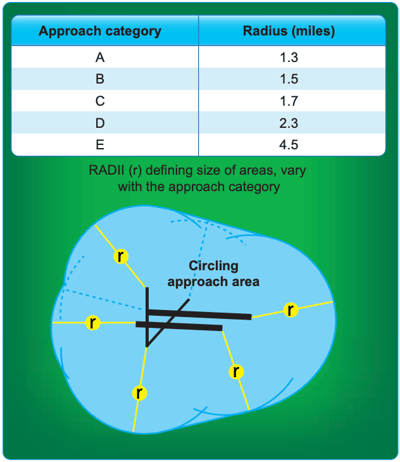
(Reference: FAA Instrument Approach Procedures Handbook)
At its core, a circling approach is used when the published instrument approach does not align with the runway intended for landing. This might happen because of terrain, obstacles, airspace constraints, or airport layout. The pilot flies the instrument approach to the circling minimums, acquires the runway environment visually, and then maneuvers to land on a different runway while maintaining visual contact with the airport.
Ready for IFR training with award-winning flight instructors at Flex Air?
|
One of the most important concepts to understand is circling minimums. These are higher than straight-in minimums because circling involves additional risk: maneuvering at low altitude, often in marginal weather, with limited visual references. Circling minimums are based on aircraft category, which is determined by approach speed. Faster aircraft require more room to maneuver, so they are provided a larger protected circling radius and higher minimums.
Maintaining visual contact is critical. Once you descend below the circling minimum altitude, losing sight of the runway environment means the approach must be discontinued immediately. This is not the time for “hoping it will reappear.” A prompt, well-executed missed approach or climb back to circling altitude can prevent a bad situation from becoming worse.
Wind awareness is another major factor. Many circling accidents have occurred because pilots underestimated the effect of wind drift, particularly strong tailwinds on downwind or base legs. A disciplined plan helps: know which side of the airport offers the best terrain clearance, anticipate wind correction angles, and avoid overly tight turns that can lead to stalls at low altitude.
Standardization also matters. While regulations do not mandate a specific circling pattern, many operators and instructors recommend a modified traffic pattern that keeps the runway on the same side of the aircraft throughout the maneuver. This reduces head movement, improves visual continuity, and lowers workload during a high-demand phase of flight.
Perhaps the most overlooked aspect of circling approaches is decision-making. Just because a circling approach is available does not mean it is the best choice. If ceilings are low, visibility is marginal, or winds are unfavorable, diverting or requesting a different approach may be the safer option. Good instrument pilots are not judged by how close they can get to minimums, but by how consistently they make conservative, well-informed decisions.
In the end, circling approaches are less about raw flying skill and more about disciplined execution. When approached with respect, preparation, and a clear plan, they become another valuable tool in the instrument pilot’s repertoire—one that emphasizes flexibility without compromising safety.
